Below are the 4 one-shots created by the Spring07 6X1 class.
By one-shot, we mean that the film is composed of only one shot with not even in-camera editing. The film begins when the camera starts rolling and ends when the camera stops rolling.
For this assignment, students used 16mm Bolex cameras and some hi-contrast film. The Bolex cameras are hand-wound, rather than battery powered and each wind has roughly 28 seconds. Since this class is all about making one-minute films and this assignment was all about a one-minute take, we had to cheat a little.
We slowed the frame rate of the Bolex to half the normal frame rate. This meant that when projected, the film would play twice the normal speed but it also meant that we could shoot for a full minute because the camera wind was running at half the speed.
Then, we processed the hi-con film using a red safelight. f4 and f5.6 seemed to yeild the best results for the sunny mid-afternoon light with which we had to work.
Then, the film was transferred to video. As I mentioned, the film ran twice as fast in the projector, so we had to slow it down to half the speed in Final Cut Pro. Also, since the film was processed as a negative, we also had to invert (or change to a positive) the video transfer.
Enjoy!
April 11, 2007


One-Minute SuperDuper8 Animations
Below are all of the four group animations for the Spring 6X1 class. These were filmed using Super 8 cameras and Ektachrome film and the project utilized a multiplane animation technique.
For the multiplane setup, an 18X24 inch glass panel was propped up by two apple boxes so that the ground below the pane was visible through the glass. The ground level served as a background and was often decorated by a backdrop. This first pane was a mid-stage of sorts. Then a second glass panel was propped up about 8 inches above the first panel. This top panel served as a front stage. Finally, the scene was decorated with props, lit and a Super 8 camera hovered about 4 feet above the glass panel.
To see some pictures of the actual class shoot visit the post on the animation shoot
But don't forget to also check out the mini-epic animations, right here!
For the multiplane setup, an 18X24 inch glass panel was propped up by two apple boxes so that the ground below the pane was visible through the glass. The ground level served as a background and was often decorated by a backdrop. This first pane was a mid-stage of sorts. Then a second glass panel was propped up about 8 inches above the first panel. This top panel served as a front stage. Finally, the scene was decorated with props, lit and a Super 8 camera hovered about 4 feet above the glass panel.
To see some pictures of the actual class shoot visit the post on the animation shoot
But don't forget to also check out the mini-epic animations, right here!
April 4, 2007
Extremely Short Festivals for Extremely Short Filmz
So, soon you will have left this class having completed six one-minute projects. Six fun, challenging and I'm sure at times frustrating projects.
So now what?
Well, of course you have a few films to add to your reel . . . AND you can also choose to enter these films into festivals.
Right now, Drucilla (Dru), our Chiweenie (Chihuahua/Dachshund) dog is curled up in my lap. She's got a tiny dog collar for her tiny dog body and a tiny leash, some tiny dog toys and so on. There's a whole market for tiny dogs out there that caters to providing things for these wee creatures.

Likewise, there is a film festival market out there for your tiny films (epic in content as they may be). There are festivals such as the Aurora Picture Show Extremely Short Shorts for any film 3 minutes or under (postmark deadline May 1).
Stay tuned to the Sixty-Second Film Festival which is currently joking that it will "be back in a minute."
There are also festivals that cater to films that originated on film (you will have four of these film films by the end of the semester).

For example, there are several Flicker film screenings aroud the world. These screenings are more informal than your average festival screening though no less fun. The only rules are that your film be under 15 minutes and that it originate on film (though it can be, and in many cases is, shown on video) A great place to start your Flicker curcuit tour is with the founding Flicker in Chapel Hill. The next screening is May 7. There is NO ENTRY FEE for entering the Flicker screenings.
In general, one-minute films are great for festivals. Though they may not serve as the meat and potatoes of any shorts festival (outside of the extremely short shorts category), they are easy for festivals to program because of their length and are nice bursts of fresh air.
So now what?
Well, of course you have a few films to add to your reel . . . AND you can also choose to enter these films into festivals.
Right now, Drucilla (Dru), our Chiweenie (Chihuahua/Dachshund) dog is curled up in my lap. She's got a tiny dog collar for her tiny dog body and a tiny leash, some tiny dog toys and so on. There's a whole market for tiny dogs out there that caters to providing things for these wee creatures.

Likewise, there is a film festival market out there for your tiny films (epic in content as they may be). There are festivals such as the Aurora Picture Show Extremely Short Shorts for any film 3 minutes or under (postmark deadline May 1).
Stay tuned to the Sixty-Second Film Festival which is currently joking that it will "be back in a minute."
There are also festivals that cater to films that originated on film (you will have four of these film films by the end of the semester).

For example, there are several Flicker film screenings aroud the world. These screenings are more informal than your average festival screening though no less fun. The only rules are that your film be under 15 minutes and that it originate on film (though it can be, and in many cases is, shown on video) A great place to start your Flicker curcuit tour is with the founding Flicker in Chapel Hill. The next screening is May 7. There is NO ENTRY FEE for entering the Flicker screenings.
In general, one-minute films are great for festivals. Though they may not serve as the meat and potatoes of any shorts festival (outside of the extremely short shorts category), they are easy for festivals to program because of their length and are nice bursts of fresh air.
March 23, 2007
Collage and Found Footage within a Cultural Context

How many letters in the alphabet can you link to a brand?
Earlier in the semester, I posted the Humument project as an example of a collage work. Though Tom Phillips was working in book form, you might easily draw a parallel between what he did and what you as a collage film/videomaker might do when you arrange nuggets of media together to create a new meaning.
Below is a talking point that does not necessarily express absolute truth but will be a jumping off point for class discussion:
Both the Lethem and the the Garnett and Meiselas articles have argued, in one way or another, that painters, filmmakers, musicians, photographers etc. do not live in a void and are not only directly influenced but quite often borrow from other artists' work.
Though this has been going on for centuries, it can easily be argued that this is especially the case in the 21st Century, where we are indundated with the omni-presence of media. Brands, TV shows, movies, advertisements, and so on make up our cultural landscape. It is not as simple as chosing to either embrace or opt out of this cultural landscape. We can not decide to turn our backs on the media culture - unless we choose to live in total seclusion. As we walk down the street, advertisements becon us from buses, bilboards, the bumpers of cars, TVs in restaurants and so on.
As filmmakers, we can not help but be influenced by this steady stream of media and create work that, intentionally or not, borrows from artists who create this media and who themselves have, no doubt, been influenced by the media stream as well. So how does this effect our views of plagerism?
March 2, 2007
Looking toward the One-Shot Assignment
16mm hi-con print stock (kodak 7363) was shot on a Bolex (undercranked at 12fps). The film was then processed as a negative using Dektol developer. The negative image was projected and captured on video. In this video, you can see the original image side by side with the positive image (inverted through a filter applied in Final Cut Pro to produce a positive). Above the two images are f-stop #s which correspond to the exposure.
For the next assignment, a group of 4 will have a sufficient amount of 16mm hi-con stock (good ol' 7363) to shoot a single take long (duration) shot. We'll be learning the basics of using a Bolex 16mm camera and returning to a little bit of hand-processing. I know those windows in the above video are small so you'll have to use your imagination, a little, to see a parking lot and cars whizzing by on a busy road in the distance. Notice that as the screen gets lighter in the left video widow (negative) it gets darker in the right window (the positive).
One other detail. Bolexes are hand-wound, not eletrically powered, cameras. In other words, you wind the camera and start shooting. Each wind gives 28 seconds of roll time. But we need to make a one-minute film using one continuous long shot so . . . we will undercrank (slow the frame rate of the Bolex) to 12 frames per second when we shoot. Then when we project the film at 24fps the action will be double the natural speed and the one-take will speed by at 28 seconds. When we slow the footage down in Final Cut to HALF the speed, we will get a 56-second continuous shot.
Still not quite a minute, you say. Add titles and slug and it is!
February 23, 2007
A Humument

Have you ever taken a page from a magazine or book and "edited" it to your liking - crossed out most of the sentences except for a few choice words, which, when read in their new sequence, take on new meaning?
The above is the first of 370 pages in a 19th century text transformed into hundreds mini-canvases. I thought this might be fitting, considering we are starting to talk about collage and appropriation. CLICK HERE to see a the full 370 page gallery of Tom Phillips' eternal work in progress. You can also click on the image above for a larger view of the first page. I have included, after a introductory blurb, which I borrowed from the humament website, a few more sample pages/pictures below. Again, click on each of the images for a better (larger) view of each page.
"A HUMUMENT is eternally a work in progress. Tom Phillips started his treatment of W.H. Mallock's Victorian novel in the mid sixties and an initial complete version was privately published by the Tetrad Press in 1970.
With Thames and Hudson's first trade edition in 1980 A HUMUMENT rapidly became a cult classic. It was seen to be a defining product of post modernism linking traditions as various as medieval illumination, experimental poetry and non-linear narrative with the procedures of modern art."


February 21, 2007
Earth, Wind, Fire, Water
Students in UNCW's 6X1 class were assigned the task of representing "the four elements," using 16mm clear leader, inks, paints, salt, oil, magazines and packaging tape. The video is a class compilation of each of the one-minute "element" projects.
Sci-Fi, Horror or Circus Theme?: The Class Movie Gig
So, as I mentioned in class, now that we have all these hand processed strips, the next task is to create sort of a collage video which makes a whole of all these separate parts. The only stipulations are that this be a video in four parts (each part, one-minute long) and that each person in the class participate in a designated role. I'll pass around "a hat," from which you will draw your position. If you want to swap positions, fight, pull hair to get what you want, etc. fine - as long as all positions are filled.
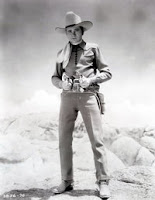
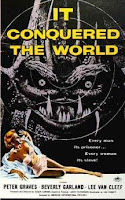
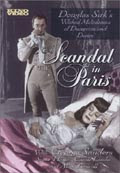
What will be the genre of this movie? . . . a bit experimental, of course. But beyond that, it's completely up to you: Western, Musical, Musical Western, Infomercial for the Dammed, 50s Melodrama, etc. Everyone in the class has a specific role but all are welcome to pitch in on genre ideas and semi-narrative themes when we watch the spliced version in class, next week.
Below is a list of all the roles with the number of people needed in each role and a basic description of the job.
Log and Capture/Tape Wrangler (1): Log and capture the footage
IMAGE
Rough Cut Editors (4): Assemble a rough cut of the four parts and add a title and also an inter-title (for each of the four parts). Each section need not be a minute long at this stage and, in fact, may only be 30 seconds long. That's fine. The Fine Cut editors will stretch out the footage to a minute per section.
Fine Cut Editors (2): Slow down sections (be mindful of frame-blending/whether or not you want it), super-impose or loop sections.
SOUND
Dialogue/Voice (1): Find some interesting bit of narration or voice that seems to fit the theme. archive.org might be a good place to start. Lot's of rights-free stuff from the mundane to the bizarre. Look in the audio section.
Ambient (2): You can record your own on mini-dv or find some online or . . . just use your imagination. Remember though that ambience implies background so your sound should fit this description and not upstage the voice or snd fx. It should also be something that is capable of stretching through the length of any one section.
Sound Effects (2): Again, create your own or find fx on line. Typing in "free sound effects" in the google search bar will turn up a lot of results.
Sound Mixers (2): Make sure the three above tracks are mixed properly - that they work with each other and don't all scream for attention at the same time (unless that is your intention . . . for part of the film).
Print to Video (1): Print that bad boy and turn it in to me.


What will be the genre of this movie? . . . a bit experimental, of course. But beyond that, it's completely up to you: Western, Musical, Musical Western, Infomercial for the Dammed, 50s Melodrama, etc. Everyone in the class has a specific role but all are welcome to pitch in on genre ideas and semi-narrative themes when we watch the spliced version in class, next week.
Below is a list of all the roles with the number of people needed in each role and a basic description of the job.
Log and Capture/Tape Wrangler (1): Log and capture the footage
IMAGE
Rough Cut Editors (4): Assemble a rough cut of the four parts and add a title and also an inter-title (for each of the four parts). Each section need not be a minute long at this stage and, in fact, may only be 30 seconds long. That's fine. The Fine Cut editors will stretch out the footage to a minute per section.
Fine Cut Editors (2): Slow down sections (be mindful of frame-blending/whether or not you want it), super-impose or loop sections.
SOUND
Dialogue/Voice (1): Find some interesting bit of narration or voice that seems to fit the theme. archive.org might be a good place to start. Lot's of rights-free stuff from the mundane to the bizarre. Look in the audio section.
Ambient (2): You can record your own on mini-dv or find some online or . . . just use your imagination. Remember though that ambience implies background so your sound should fit this description and not upstage the voice or snd fx. It should also be something that is capable of stretching through the length of any one section.
Sound Effects (2): Again, create your own or find fx on line. Typing in "free sound effects" in the google search bar will turn up a lot of results.
Sound Mixers (2): Make sure the three above tracks are mixed properly - that they work with each other and don't all scream for attention at the same time (unless that is your intention . . . for part of the film).
Print to Video (1): Print that bad boy and turn it in to me.
Subscribe to:
Posts (Atom)


